If we imagine 2050, we will see half the class sitting in class wearing glasses.
# Isn’t this a warning of a huge crisis?
According to global health experts and vision researchers, the problem of nearsightedness, known as myopia, will be severe by the middle of this century. One in every two children will suffer from myopia.
And it is time that we take this problem seriously or else this flood will cause devastation, as the number of children wearing glasses is constantly increasing.
# What do you think?
Why Nowadays so many children need glasses ?
Nowadays the world has changed, we have been seeing this change for two decades,
Our childhood was not like this, our childhood memories are very different,
This change is visible in today’s children.
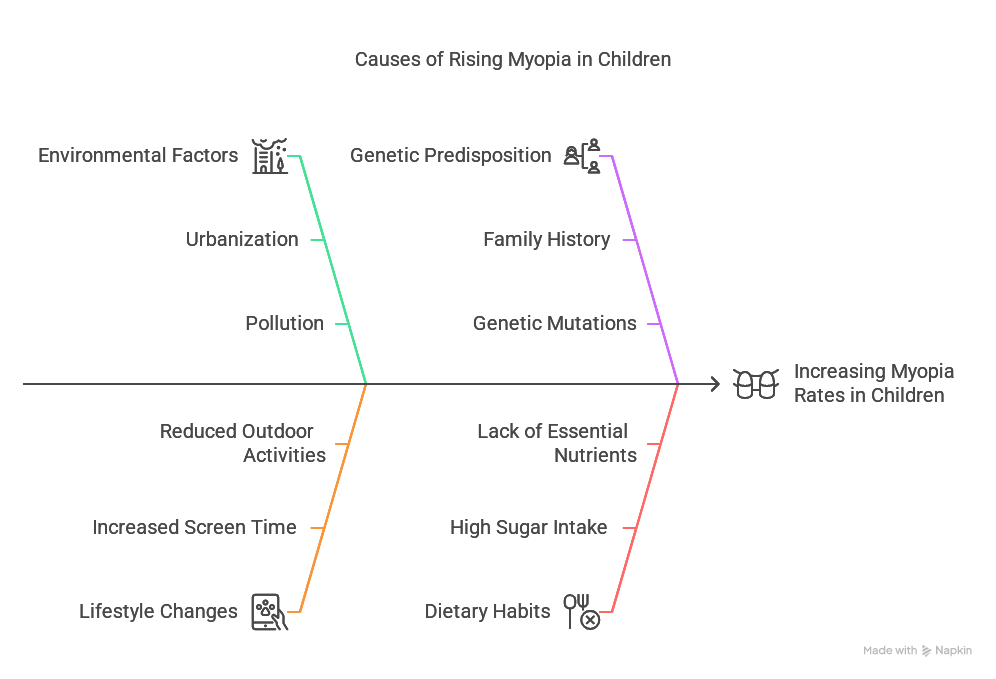
Nowadays the age of gadgets has come everywhere, laptops, smartphones, smart TVs, tablets, video games, all these have become means of education and entertainment, we cannot call them toys.
But our eyes have not always been designed for near vision, this is the problem.
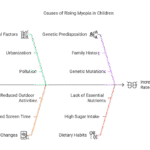
Earlier children used to spend more time outside playing on the ground. In contrast, today’s children spend more time indoors, glued to books and screens of phones, laptops, tablets, and go out to play for very little time.
Two things are very important for the development of healthy eyes. One is long distance vision, which means that distant objects should be clearly visible to the eyes, and the other is natural daylight. These two things are disappearing from children’s lives.
If the right treatment of myopia is required then solutions to all these problems will have to be found, as this is a big problem in urban life, many children live in small flats, apartments where they cannot see far, forget about seeing, even the sunlight is not visible, there is lack of light and on top of that there is tension of studies and less outside activities, if solutions to these things are found then we will get the right remedy for myopia.
# Every second child” — what does that really mean?
By 2050, 50% of people, especially children, will suffer from nearsightedness, is what this catchy headline means.
This is the estimate of other global studies and the World Health Organization. It reflects real science
About 75-85% of school going children are already suffering from nearsightedness, this is the situation in urban areas. In other countries of the world like Singapore, South Korea and China, this problem is already present. And now this disease of nearsightedness is spreading rapidly in the Middle East and Europe, India and North America.
So this is the truth, accept it and find a solution, if it is being believed that “every second child will need glasses” then it is not an exaggeration.
# What’s the big deal about glasses?
Glasses are easily available, initially they don’t seem like a problem, and in fact many kids enjoy wearing glasses, so many don’t see it as a problem. But the effects of early myopia can go far beyond just the need for corrective lenses.
# Learning challenges:-
If diagnosis is delayed, children with nearsightedness can have a lot of problems at school as they struggle to see far away.
# Emotional and mental effects:-
Avoid playing sports, feel uncomfortable, feel lonely at times, especially during physical sports.
# Long-term health risks:-
Severe nearsightedness can lead to serious eye problems later in life such as glaucoma, retinal detachment, and even vision loss.
So yes, glasses can fix vision – but they don’t fix the root of the problem.
# Can we reduce it? Is it in our hands to control it? Absolutely.
One good thing is, myopia can be genetic, lifestyle and environment also play a big role in it. One good news is that myopia is not inevitable. And with some right changes, we can actually reduce this problem.
✅ Encourage them to go outside-
It has been studied that if children play outside for 2 hours or more, the problem of myopia can be reduced to a great extent. Nature is not only good for the eyes but is also very important, so send children to play in nature for at least 2 hours.
✅ Limit screen time-
In today’s digital world, it is very difficult to keep children away from screens. But we can set limits for children, such as not using screens during mealtime and entertainment time, this practice will be very beneficial.
✅ Regular eye exams-
Early detection is important.
If children get their eyes checked once a year, this problem can be detected early, because many children do not understand that they cannot see properly or have blurred vision at a distance and they think this is normal. That is why if you get your eyes checked regularly, this problem can be caught early.
✅ Find myopia management tools-
New options like special lenses, low-dose atropine eye drops and advanced contact lenses can help slow the progression of myopia in children already suffering from myopia.
# What can parents, teachers and leaders do?
On this issue, all the people together have the movement to pay attention and work because this is a collective issue.
Parents- should take steps, spend time together, roam in the week, stay away from the screen and encourage visual brakes while studying.
Schools – integrate eye health policies, spread awareness about eye health, improve classroom lighting, provide longer breaks, etc.
Governments and health systems – fund vision screening programs, organize events, and educate families about eye health and eye screenings. Promote eye health campaigns.
# Looking ahead to 2050: A call to action because action speaks louder than words-
Half of the world’s children will wear glasses by 2050. This is not a myth – it is a warning for the future. We have time to change habits, spread awareness, take action and protect the eyes of our future generations from myopia.
Let’s make sure they grow up in a world that is not just visible – but vibrant and clear. Because you get life only once, live it beautifully by keeping your eyes beautiful. Let’s teach children this and let’s start working together for healthy eyes for children.